
Exploring the Many Dimensions of Durability: Insights from Dr. William Mars’ Opening Address at Endurica’s Community Conference
Dr. Will Mars, founder and president of Endurica, challenged attendees to think beyond traditional boundaries and consider the many “Dimensions of Durability” that define product performance and longevity. This blog post is based on his opening comments at the conference with the aim to share with entire global Endurica Community.
Durability: More Than Just Strength
“Durability,” as Will emphasizes, “is far from a one-dimensional concept. It plays a central role in determining whether a product succeeds or fails in the marketplace. Yet durability alone is not enough, it must coexist with performance, sustainability, and cost-effectiveness.”
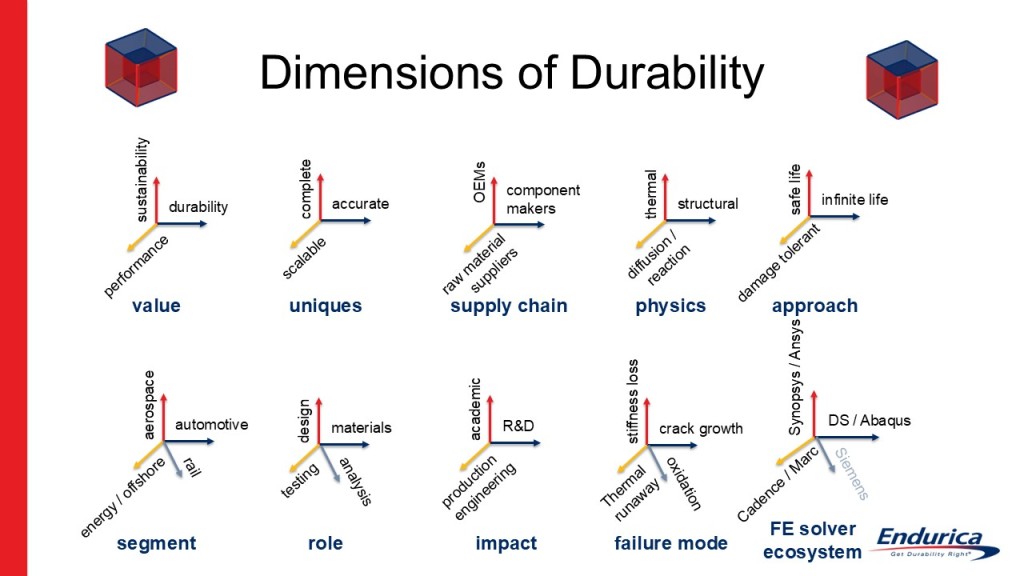
To illustrate this complexity, he describes durability as a system with multiple dimensions:
· Customer value: Products must balance durability with performance and environmental considerations.
· Supply chain integration: From OEMs defining mission profiles to suppliers selecting materials and designing components, durability decisions are distributed across a wide ecosystem.
· Physics and materials science: Mechanical stresses, heat generation, oxidation, and chemical reactions all interact to influence failure.
· Failure modes: Crack growth, thermal degradation, oxidation, and ozone attack each present unique risks.
· Analysis approaches: Engineers may adopt infinite life, safe life, or damage-tolerant strategies depending on the application.
· Applications and disciplines: Aerospace, automotive, and offshore systems all bring different requirements, while chemists, analysts, and designers each contribute unique insights.
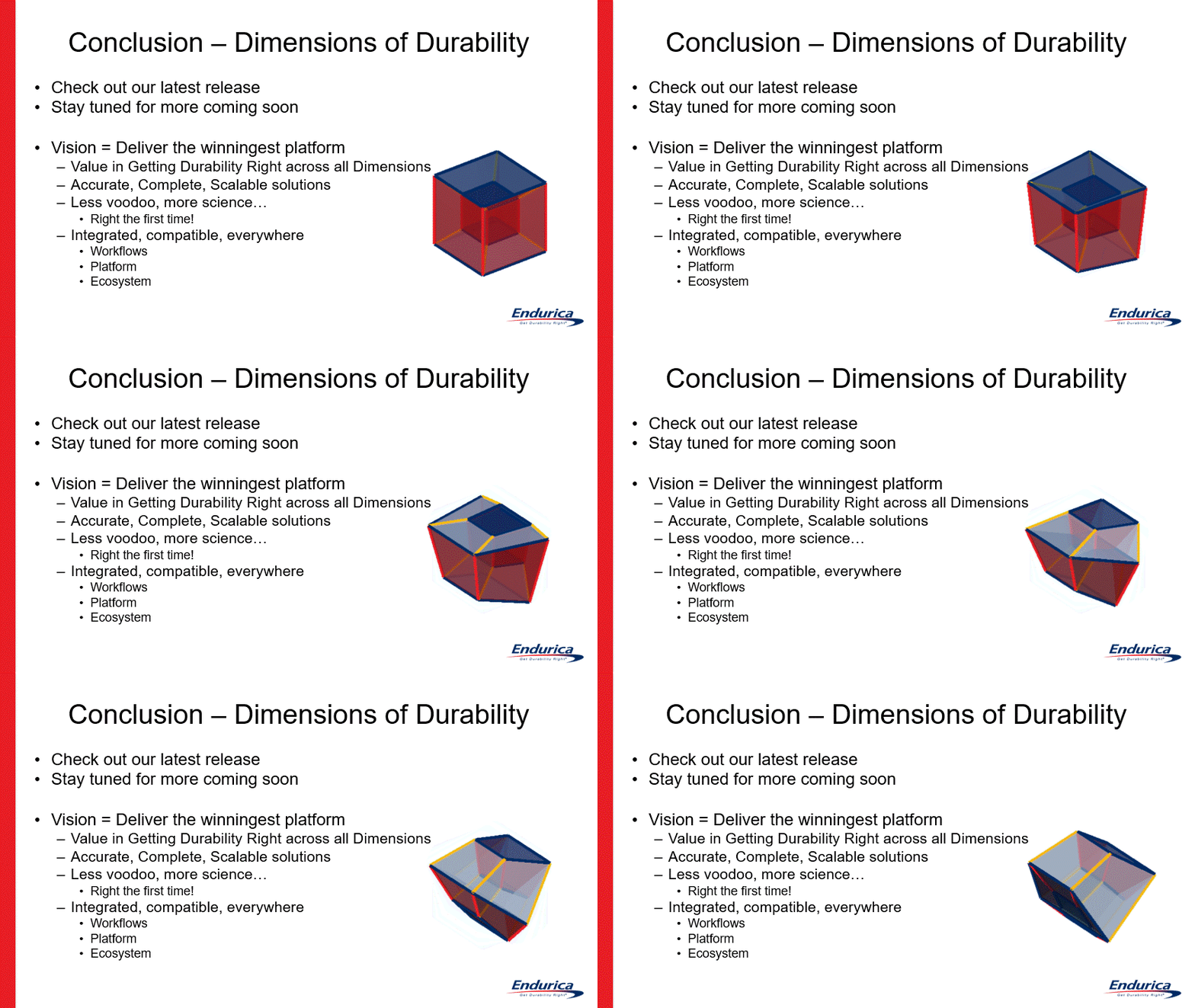
This complexity is symbolized by the conference’s visual motif: a tesseract, or four-dimensional cube. Its animation reflects time as an additional dimension—reminding us that durability is not static, but evolves throughout a product’s life.
Real-World Case Studies Driving Innovation
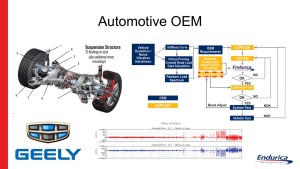 Geely, a major electric vehicle manufacturer in China integrates durability workflows between OEMs and suppliers. By leveraging Endurica’s advanced solvers, Geely has been able to more accurately account for real-world road conditions and mission profiles—moving beyond the oversimplified models of the past.
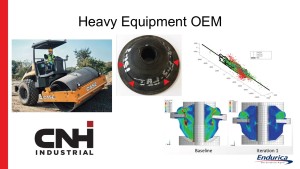
Vibration isolation in construction equipment is another application of Endurica’s technology. Engineers analyze complex, multi-axis loading scenarios and iteratively improve component design to significantly extend service life. This kind of data-driven optimization reflects a shift toward more precise and actionable durability insights.
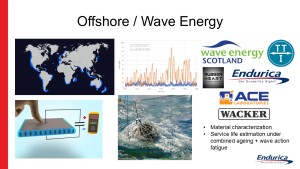 Perhaps the most innovative project Will shares is with Wave Energy Scotland, where silicone rubber was used as a dielectric generator to harvest energy from ocean waves. By combining material testing with advanced modeling, researchers were able to predict how the material would perform under long-term environmental exposure and cyclic loading, highlighting the growing intersection of durability and sustainability.
New Tools and Capabilities
Dr. Mars also introduced several new developments aimed at expanding access to durability analysis.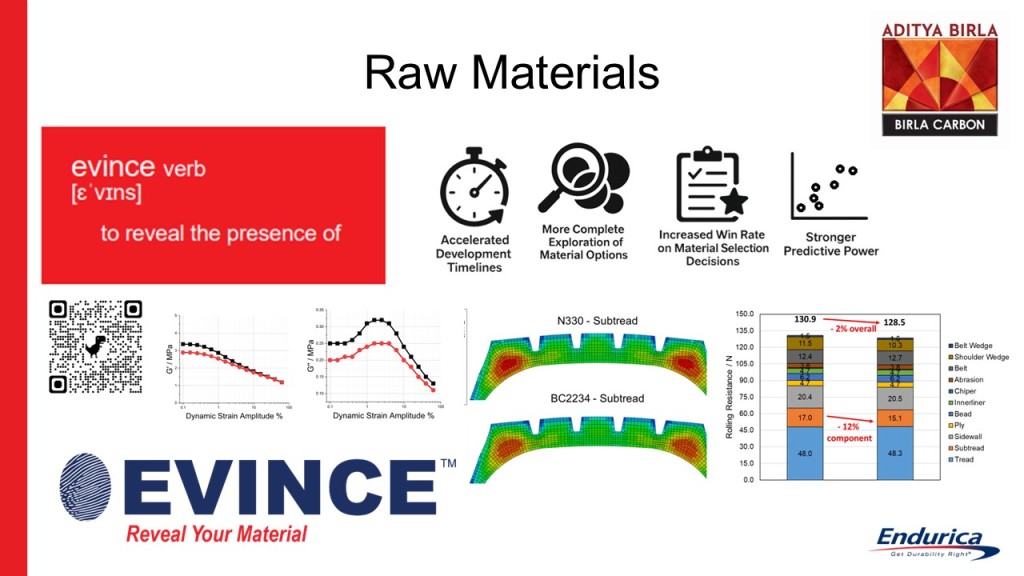
· EVINCE is a service designed for raw material suppliers. Suppliers have long faced barriers in demonstrating how their materials perform in real-world applications. EVINCE bridges that gap by providing simulation and characterization services,
allowing suppliers to showcase product-level performance without relying on downstream manufacturers.
· Additionally, Endurica has made significant efforts to improve documentation and provide validated example cases. While this may seem like a minor update, it plays a crucial role in helping new users adopt advanced tools with confidence—ultimately broadening the impact of durability engineering.
· A new partnership with Coreform further enhances capabilities through improved meshing tools, which are critical for accurate finite element analysis—especially when modeling fine geometric details.
Looking Ahead: What’s Next for Durability Engineering
The future roadmap outlined by Dr. Mars signals exciting advancements. Among the highlights:
· A new user interface to make tools more accessible
· Large crack analysis, extending capabilities beyond traditional small crack modeling
· A deformation index output to better understand effects due to stiffness variation and mode of control (ie displace and/or force control)
· A wear modeling capability, enabling prediction of material loss in contact zones for both tire and non-tire applications
These developments reinforce Endurica’s commitment to providing durability analysis tools and workflows that are accurate to the physics, complete in their features, and scalable from individual to full enterprise contexts.
Beyond Conference Takeaways
Will extends an invitation to explore, experiment, and engage with these new tools and ideas: “Durability is not a narrow technical challenge,” Will emphasizes. “Durability is a multidimensional problem that demands collaboration, innovation, and a holistic mindset. As industries push toward higher performance and sustainability, the ability to understand and predict durability across all its dimensions will become not just an advantage, but a necessity.”
About author

Add comment
You must be logged in to post a comment.